Life Insurance With Living Benefits: What If You Get Sick but Don't Die?
Most people buy life insurance to protect their family if they die. But what protects their family financially if they become seriously ill and survive?
It's a question more families should be asking.
Imagine suffering a heart attack, receiving a cancer diagnosis, or experiencing a stroke. You survive, thankfully, but now you're facing medical expenses, lost income, and everyday bills that haven't stopped coming. Your family still needs groceries. The mortgage is still due. And your paycheck may have stopped.
What if your life insurance could help while you're still alive?
That's exactly why life insurance with living benefits deserves a closer look.
At the Shanley Insurance Agency, we've helped families throughout Upstate South Carolina protect their financial futures since 1999. One of our specialties is helping people understand how living benefits life insurance can provide financial protection during qualifying serious illnesses, not just after death.
What Is Life Insurance With Living Benefits?
Traditional life insurance provides a death benefit to your beneficiaries when you pass away.
Life insurance with living benefits can allow you to access part of that death benefit while you're still alive if you experience a qualifying critical, chronic, or terminal illness. These features are generally provided through accelerated death benefit riders.
Depending on the policy and the type of illness, an approved claim could provide money to help with everyday expenses, mortgage payments, replacing lost income, or other financial needs.
And here's something many people don't realize: You don't necessarily need permanent life insurance to have living benefits. Some term life insurance policies offer them, too.
The key is understanding exactly which protections your policy includes.
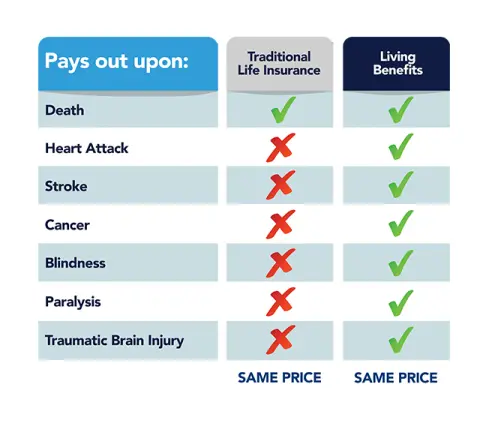
Three Types of Living Benefits That Could Make a Difference
Not all living benefits life insurance policies work alike. These are three important protections to understand.
1. Critical Illness: What Happens After a Heart Attack, Stroke, or Cancer Diagnosis?
Imagine being diagnosed with a serious illness and finding yourself unable to work for several months. Certain life insurance policies include critical illness accelerated benefit riders that may provide access to part of the death benefit following a qualifying event, such as:
Certain heart attacks
Certain strokes
Qualifying cancer diagnoses
Kidney failure or specified organ transplants
Not every diagnosis automatically qualifies. The policy's definitions, exclusions, and medical requirements determine eligibility.
The real question is this: Could your family maintain its lifestyle if your income suddenly stopped?
That's one reason families raising children, paying mortgages, and building retirement savings should understand this protection.
2. Chronic Illness: What If You Lose the Ability to Care for Yourself?
A serious illness doesn't always end quickly. Sometimes it changes how you live for years.
A chronic illness rider may allow access to policy benefits if you meet specific conditions, often involving the inability to perform at least two of six activities of daily living, such as bathing, dressing, or eating, or experiencing qualifying severe cognitive impairment.
Some policies may provide money that can help with in-home care, long-term care, household expenses, or other financial needs.
Living longer is wonderful. But living longer while needing ongoing assistance can create expenses many families aren't prepared for.
Chronic illness riders differ from traditional long-term care insurance, and their qualifications and benefit limits need careful review.
3. Terminal Illness: Financial Help When Time Matters Most
A terminal illness rider may allow you to receive a portion of your life insurance death benefit when a physician certifies a qualifying limited life expectancy.
Depending on the policy, this could help you:
Pay outstanding financial obligations
Reduce financial stress on your spouse or family
Address medical or personal expenses
Spend more meaningful time with loved ones
Many life insurance policies include some form of terminal illness accelerated death benefit, although eligibility requirements and costs vary.
Can Term Life Insurance Include Living Benefits?
Yes! And this is one of the biggest misconceptions about life insurance.
You don't necessarily need an expensive permanent life insurance policy to access living benefits. Some term life insurance policies offer critical, chronic, and terminal illness accelerated benefit riders.
That means a family purchasing a 15 - 20 or 30-year term policy may be able to obtain both traditional death benefit protection and financial protection against certain serious illnesses.
For many working families, term life insurance with living benefits is worth comparing with traditional term coverage. The goal isn't simply finding the lowest premium. It's understanding what protection you're actually purchasing.
How Much Money Can You Receive While You're Alive?
The amount depends on your policy, the rider, the illness, and the insurance company's claim calculations.
Let's say you own a $500,000 life insurance policy with qualifying living benefit riders. Following an eligible serious illness, you may be able to request an accelerated benefit.
However, that does not mean you automatically receive the entire $500,000. Insurers may use benefit limits, actuarial discounts, administrative charges, and other contract provisions to calculate the amount available.
Here's what you need to know: Money received through an accelerated death benefit generally reduces the death benefit remaining for your family.
That's why it's important to understand the payment calculation before taking an accelerated benefit.
Are Living Benefits Tax-Free?
Living benefits are often described as tax-free, but the details matter.
Under federal tax rules, qualifying accelerated death benefits paid because of terminal or chronic illness may be excluded from taxable income. Chronic illness payments can be subject to additional requirements and limits.
Critical illness accelerated benefits should not automatically be assumed to receive identical tax treatment in every situation.
Before accepting a substantial benefit payment, review the policy and consult a qualified tax professional.
Does Your Current Life Insurance Policy Include Living Benefits?
Here's a question worth asking:
If you experienced a serious illness tomorrow, would your life insurance help you financially, or would your family have to wait until you died to receive a benefit?
Many policyholders simply don't know.
Start by reviewing your policy for terms such as:
Accelerated Death Benefit Rider
Critical Illness Rider
Chronic Illness Rider
Terminal Illness Rider
If you don't see these provisions, that doesn't necessarily mean you have no options. But adding riders to an existing policy isn't always possible, and new coverage may require underwriting.
The best time to investigate living benefits is generally while you're healthy enough to qualify.
Living Benefits Life Insurance in Upstate South Carolina
At the Shanley Insurance Agency, we believe life insurance should do more than prepare your family for the worst day of their lives. It should also be worth exploring how coverage may help when a serious illness changes your financial circumstances.
We've been a trusted independent life and health insurance agency since 1999, serving families in Six Mile, Pickens, Clemson, Easley, Greenville, Anderson, Seneca, and surrounding Upstate South Carolina communities.
As an independent agency, we can compare coverage options from multiple insurance companies rather than limiting you to one carrier. And, because we bring the office to you, appointments are available by phone, online, or in person where convenient.
Don't Just Ask What Happens If You Die. Ask What Happens If You Live!
A serious illness can change your financial future just as dramatically as an unexpected death.
Your family needs protection in both situations.
Whether you're looking for term life insurance with living benefits, reviewing an existing policy, or simply wondering what coverage might be available, we're here to help you understand your choices.
Find out whether your life insurance can work for you while you're alive.
Contact Shanley Insurance Agency for a complimentary Living Benefits Life Insurance Review.
Call Howard Shanley: (864) 868-5194
Website: www.shanleyscagency.com
Email: shanleyagency@gmail.com
Shanley Insurance Agency | Independent Life & Health Insurance | Trusted Since 1999
Living benefits are subject to policy provisions, rider eligibility requirements, claim approval, and applicable limitations. Accelerated benefits generally reduce the remaining death benefit.